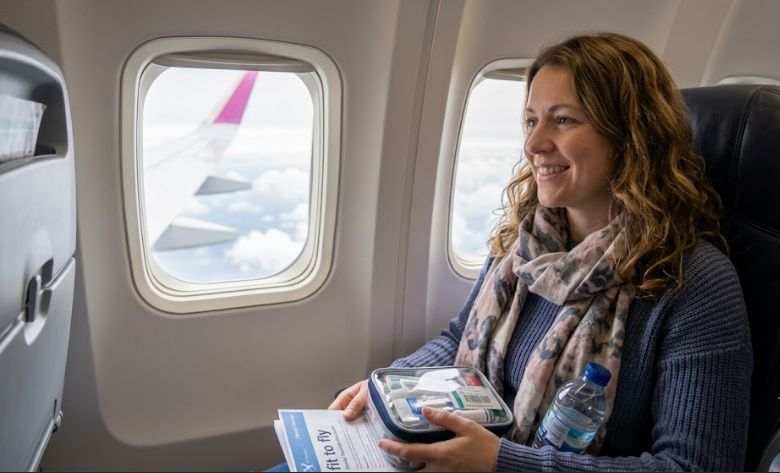
The checklist for a UK dental tourist used to be simple: passport, boarding pass, clean teeth, and a pocketful of savings. Thousands of British patients regularly hop onto short-haul flights to hubs like Budapest, Kraków, or Istanbul for high-quality, affordable dental implants. However, many travelers ask a critical question: “Can I fly back to the UK right after my dental surgery?”
If you are just getting a simple filling or a basic, uncomplicated crown, rushing to catch a late-night Ryanair or Wizz Air flight back to Luton or Stansted is usually fine. However, if your treatment involves complex oral surgery—specifically sinus lifts, extensive bone grafting, or multiple surgical extractions—boarding an airplane too early can compromise your treatment.
This review explains the clinical realities, physiological risks, and airline logistics of flying after major dental procedures. We will cover why cabin pressure can affect a healing jaw, what can happen to a fresh sinus lift at 35,000 feet, and exactly how many days you need to stay on the ground before flying home.
1. The Physics of Flight: Cabin Pressure and the Healing Jaw
To understand why flying after dental surgery can be risky, we need to look at how airplane cabins work.
While commercial planes cruise at altitudes between 30,000 and 40,000 feet, the interior cabin is pressurized to simulate an altitude of about 6,000 to 8,000 feet (per the Aerospatial Medical Association). This drop in atmospheric pressure causes gases inside the human body to expand by roughly 20% to 30%.
For a healthy, uninjured passenger, this mild expansion goes unnoticed, save for a slight popping in the ears. However, if you have a fresh surgical wound in your mouth or an altered sinus cavity, this pressure differential introduces three major complications:
-
Barodontalgia (Flyer’s Toothache): Trapped micro-bubbles of air beneath a newly placed implant, a fresh extraction socket, or a temporary restoration expand against inflamed nerve endings, causing sudden, sharp pain.
-
Hematoma and Prolonged Bleeding: The drop in ambient pressure can cause fragile, newly formed blood clots in extraction sockets to rupture or ooze, causing delayed bleeding mid-flight.
-
Barosinusitis: When surgical swelling blocks the natural openings of your sinus (the ostium), expanding air becomes trapped inside. This places immense physical strain on delicate surgical lines.
2. The Golden Standard: Danger Zones by Procedure Type
The timeline for safely flying home depends entirely on the type of procedure you received. A common mistake in dental tourism is treating all “implant surgeries” the same way. The following breakdown shows the minimum recommended wait times based on peer-reviewed data from The Journal of Dental Tourism and Craniofacial Research.
Simple Single Extractions or Uncomplicated Implants
-
Minimum Safe Window: 24 to 48 hours
-
The Risk Profile: Low
-
Why You Need to Wait: The primary goal here is to allow a stable blood clot to form in the socket (osseointegration and initial soft tissue closure). Flying within hours of an extraction increases the risk of the clot dislodging, which can lead to a painful dry socket (alveolar osteitis) while you are mid-flight over the North Sea.
Multiple Extractions, Bone Grafts, or Full-Arch Reconstructions (All-on-4 / All-on-6)
-
Minimum Safe Window: 3 to 5 days
-
The Risk Profile: Moderate to High
-
Why You Need to Wait: Massive soft-tissue reflection, extensive suturing, and the placement of artificial bone matrices require careful monitoring. Peak swelling typically occurs 48 to 72 hours post-surgery. Flying during this peak window can worsen facial edema (swelling) and place unnecessary strain on your sutures due to cabin pressure.
Sinus Lifts (Direct/Lateral Window or Indirect/Osteotome)
-
Minimum Safe Window: 10 to 14 days (Absolute Minimum: 7 days with medical clearance)
-
The Risk Profile: Critical
-
Why You Need to Wait: This is the most delicate scenario. A sinus lift involves gently separating and elevating the Schneiderian membrane inside your maxillary sinus to pack bone graft material underneath. This area is highly sensitive to pressure changes, making it the most vulnerable to flight-related complications.
3. The Anatomy of a Sinus Lift vs. 35,000 Feet
To understand why a sinus lift demands a longer recovery period before flying, it helps to examine the anatomy involved. When a surgeon performs a lateral window sinus lift, they cut a small opening into the jawbone above your premolars or molars, carefully lift the thin Schneiderian membrane, and insert bone graft granules. This creates a stable base for future dental implants.
For the first two weeks, this graft material is simply a loose collection of granules held in place by a collagen membrane and fine sutures. It has not yet integrated into solid bone.
What Happens During Ascent and Descent?
As a Ryanair or Wizz Air flight ascends, the air pressure inside the cabin drops. The air trapped within your maxillary sinus expands to equalize with the cabin environment.
If your sinus pathways are swollen closed from surgery, that expanding air cannot escape. It presses directly against the newly lifted membrane and the loose bone graft material.
This pressure can cause several serious complications:
-
Membrane Perforation: The delicate Schneiderian membrane can tear under pressure, allowing bone graft granules to spill into the sinus cavity. This often leads to chronic, painful sinusitis that requires corrective surgery.
-
Acute Barosinusitis: This causes severe, throbbing pain behind your eyes, cheekbones, and forehead, accompanied by sudden nosebleeds mid-flight.
-
Oroantral Fistula: The pressure can force open the surgical incision line in your gums, creating an abnormal channel between your mouth and your sinus cavity. This open pathway allows bacteria from your mouth to enter the sinus, significantly increasing the risk of infection.
4. The Budget Airline Reality: Ryanair & Wizz Air Layouts
When planning your journey home, it is important to consider the environment on budget short-haul flights. Flying back to the UK on airlines like Ryanair, Wizz Air, or EasyJet presents specific logistical challenges for a recovering surgical patient.
| Flight Factor | Legacy Carriers (BA, Lufthansa) | Budget Carriers (Ryanair, Wizz Air) | Direct Impact on Dental Recovery |
| Seat Pitch & Reclination | 31–32 inches / Reclining options | 28–29 inches / Non-reclining pre-set | Keeping your head elevated above your heart is crucial for reducing swelling. Budget seating forces an upright, slightly forward posture that can increase throbbing in the jaw. |
| Cabin Humidity | 15% – 20% | Often < 10% on tightly packed, quick-turn flights | Ultra-dry air dries out oral and nasal mucous membranes, which can irritate surgical sites and cause coughing spells that strain the sinuses. |
| Luggage Restrictions | Generous overhead + under-seat allowances | Strict weight limits; priority booking required for overhead bags | Lifting heavy cabin bags into overhead bins causes strain that raises blood pressure, which can trigger fresh bleeding from your incisions. |
| Airport Infrastructure | Jet bridges frequently used | Walkways, stairs, and bus transfers are common | Long walks across the tarmac in cold or windy weather, followed by climbing steep plane stairs, increases your heart rate right after surgery. |
The “Quick-Turn” Cabin Environment
Budget airlines rely on fast turnarounds, often spending less than 30 minutes on the ground between flights. This rapid cycling can sometimes cause abrupt, noticeable changes in cabin pressure during rapid descents, which can be particularly uncomfortable if your sinuses are congested.
5. Practical Steps: Your Guided Recovery Timeline
If you are traveling abroad for extensive dental care, use this timeline to plan your trip safely and avoid rushing home too soon.
[ Day 0: Surgery ] ──► [ Days 1-3: Peak Swelling ] ──► [ Day 4: Post-Op Check ] ──► [ Days 7-14: Safe to Fly ]
  • Rest at clinic       • Rest at hotel                 • Doctor clears sites      • Minimal pressure risk
  • Ice packs            • Soft food diet                • Remove stitches          • Smooth flight home
Phase 1: The Initial 72 Hours (The Post-Op Standstill)
-
What to do: Stay in your destination city. Rest in your hotel room, keep your head elevated on extra pillows, and apply ice packs to your face.
-
Diet: Stick to cool or room-temperature liquids and soft foods like yogurt, pureed soups, and smoothies. Do not use a straw, as the suction can dislodge healing blood clots.
Phase 2: Day 4 to Day 6 (The Follow-Up Window)
-
What to do: Return to your dental clinic for a post-operative checkup. Your surgeon will examine your incisions, check for signs of early infection, and ensure your healing is on track.
-
Flight Preparation: Ask your dentist for a written copy of your surgical notes, an X-ray copy, and a formal “Fit to Fly” certificate. This document is highly valuable if you need to adjust your travel plans or show documentation to airport staff.
Phase 3: Day 7 to Day 14 (Safe Boarding Windows)
-
For Extractions/Implants: You are generally clear to fly by Day 3 to 5, once swelling begins to subside.
-
For Sinus Lifts: If you had a minor sinus revision, you may be cleared to fly around Day 7. For extensive, lateral-window sinus lifts, it is best to wait until Day 10 to 14 before flying home.
6. Checklist: What to Pack for Your Flight Back to the UK
When you are ready to board your flight home, keep these items in your carry-on bag to manage any discomfort or unexpected pressure changes:
-
Medication Case: Pack your prescribed antibiotics, anti-inflammatory medications (like Ibuprofen), and pain relief options. Keep them in your hand luggage so they are easily accessible, rather than in checked baggage.
-
Medicated Nasal Spray: Bring a decongestant spray containing oxymetazoline or xylometazoline (such as Otrivin or Sudafed). Use it about 30 minutes before your flight takes off and 30 minutes before descent to help keep your sinus pathways open.
-
Sterile Gauze Packs: Keep a few clean gauze pads close at hand. If the cabin pressure causes light bleeding from an extraction site, place a gauze pad over the area and bite down firmly with steady pressure for 20 minutes.
-
Sneeze Management: If you feel the urge to sneeze during the flight, do not pinch your nose closed. Sneeze with your mouth open to prevent sudden pressure spikes in your sinus cavities.
-
Hydration: Buy a large bottle of still water after passing through airport security. Take small, frequent sips throughout the flight to keep your mouth moist, but avoid carbonated drinks and alcohol.
Summary: Prioritizing Your Long-Term Recovery
When planning dental tourism, it can be tempting to book a quick turnaround trip to save on hotel costs. However, rushing home immediately after major oral surgery can put your treatment at risk.
If your treatment plan includes a sinus lift or extensive bone grafting, treat your travel timeline as a core part of your medical care. Factor an extra 7 to 10 days of hotel stay into your budget from the start. Spending a few extra days resting on the ground ensures that your new smile—and your health—arrives home safely.
Frequently Asked Questions
1. What happens if I fly too soon after a dental extraction?
If you board a flight within 24 to 48 hours of a tooth extraction, the main risk is dry socket (alveolar osteitis). The drop in cabin pressure, paired with the physical strain of travel, can dislodge the fragile blood clot forming in the empty socket. Without this clot, the underlying bone and nerves are exposed to the air, causing severe pain and delaying your recovery.
2. Why is a sinus lift more sensitive to flying than a regular implant?
A sinus lift involves lifting the thin membrane inside your maxillary sinus and packing it with loose bone graft granules. Because your sinuses are air-filled cavities, they are highly sensitive to the atmospheric pressure changes that occur during a flight. Flying too soon can cause the air inside your sinuses to expand, which risks tearing the membrane, shifting the graft material, or causing acute sinus pain and nosebleeds.
3. Can I fly with temporary crowns or bridges?
Yes, flying with temporary crowns or bridges is generally safe, provided they are securely cemented. However, because microscopic air bubbles can sometimes get trapped under the temporary restoration, you might experience mild throbbing or tooth sensitivity (barodontalgia) as the cabin pressure changes during takeoff and landing.
4. Will airport security scanners damage my new dental implants or bone grafts?
No, dental implants are made of medical-grade titanium or zirconia, which are non-magnetic materials. They will not set off walk-through airport metal detectors or full-body scanners. Additionally, any bone grafting materials or healing caps are entirely safe and will not cause any issues at security checkpoints.
5. What should I do if my mouth starts bleeding mid-flight?
If you experience minor oozing or bleeding while in the air:
-
Clear any excess fluid from your mouth.
-
Place a fresh, sterile gauze pad directly over the surgical site.
-
Bite down firmly with constant pressure for 20 to 30 minutes.
-
Keep your head elevated, remain calm to keep your blood pressure steady, and avoid drinking through a straw or rinsing aggressively.
6. Will travel insurance cover me if I miss my flight due to dental complications?
Standard travel insurance policies rarely cover complications resulting from elective cosmetic treatments or planned medical tourism abroad. If your dentist issues a “Not Fit to Fly” notice due to a post-operative issue, you will likely have to pay out-of-pocket to rebook your Ryanair or Wizz Air flight. It is highly recommended to purchase specialist medical tourism insurance before your trip.
Sources & Scientific References
- Dental Tourism and Air Travel Complications: The Risk of Barotrauma and Barodontalgia in Cross-Border Dentistry. Journal of Craniofacial Research, 2023. NCBI PubMed
- Aerospace Medical Association (AsMA): Medical Guidelines for Airline Passengers and Cabin Pressure Management. AsMA Official Guidelines
- Maxillary Sinus Augmentation Post-Operative Protocols: Guidelines from the British Association of Oral and Maxillofacial Surgeons (BAOMS). BAOMS Clinical Resources
- Barodontalgia Secondary to Sinus Lift Surgery: A Clinical Case Study on Short-Haul Flight Stressors. International Journal of Oral and Maxillofacial Implants. IJOMI Literature